Every time you turn on a faucet, flush a toilet, or start your washing machine, your home’s plumbing system quietly goes to work. Although most homeowners don’t think about it until something goes wrong, knowing how does household plumbing work can help you identify potential issues early, do some basic troubleshooting, and get the most out of your plumbing repair service.
There are 2 important tasks that a residential plumbing system is supposed to accomplish. First, it provides clean, pressurized water to the fixtures and appliances in your home. Second, it can safely drain away wastewater through a separate drainage system. These two systems are used independently, but together to maintain a clean, comfortable, and functional home.
Have you ever asked yourself how household plumbing works or wanted to learn how a household plumbing system works without the jargon and technical terms? This guide will tell you.
Table of Contents
Understanding the Basics of a Household Plumbing System
A household plumbing system consists of pipes, valves, fixtures, and appliances that provide water movement within the home. The system may look complex behind the walls and under the floor, but it operates in a simple manner.
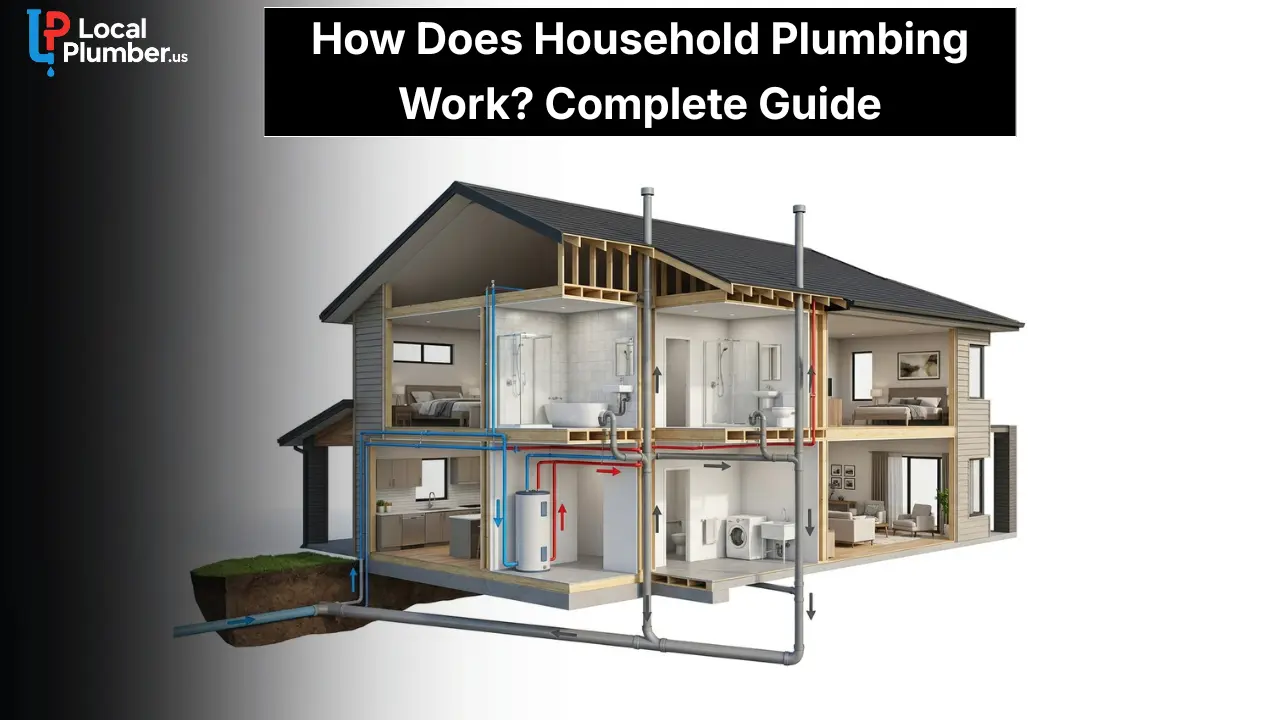
The plumbing system has two main networks. The first is the water supply system which supplies clean water to the house with pressure. The second is the drain, waste, and vent (DWV) system, which safely conveys wastewater and used water away from the property.
These systems never come into contact with each other. Fresh water is fed into sealed pipes to the sinks, showers, toilets, and the appliances, while waste water is flushed through separate drain pipes into a municipal sewer system or a private septic system. This separation allows your household’s drinking water to be separated and maintain proper sanitation.
The first step to understanding how a household plumbing system works is to know how these two systems work together without constant oversight from homeowners.
How Does Household Plumbing Work?
The best way to understand how does household plumbing work is to follow the water as it moves in and out of your house.
Clean Water Enters Your Home
A good plumbing system is always started with a good source of clean water. The majority of dwellings obtain treated water from a water supply provided by the municipality; in rural areas the water may be sourced from private wells.
Water is brought into the house from the main water service line that leads to the city’s water system or well system. The water usually flows through a water meter which is used to gauge the amount of water that is being used for water billing. The main shut-off valve is also close by, useful for homeowners to turn off the water in emergencies or during repairs.
This water is pressurized as it enters the house, so it can be used to move around easily and efficiently without the need for extra pumps in most homes.

Water Pressure Delivers Water Throughout the House
The water supply system uses pressure rather than gravity, unlike the drainage system. Municipal water systems have a consistent pressure that pushes the water to flow through the network of supply pipes.
When you turn on a faucet or start an appliance, the water pressure pushes the water through the pipes in no time at all. That’s why water comes into your kitchen sink, shower or outside hose quickly.
Correct water pressure is necessary. Pressure that is too low can cause showers to flow slowly and appliances to malfunction. However, too much pressure can put unnecessary strain on pipes, valves, and fixtures, leading to leaks down the road.
The Water Heater Provides Hot Water
Not all plumbing facilities are operated on cold water. Most houses will also have a home water heater designed to heat water before sending it to different fixtures.
A dedicated water heater supply line brings cold water into the water heater. After heating, it flows through hot water pipes to bathrooms, kitchens, laundry rooms and other warm water areas.
This setup enables homeowners to enjoy hot and cold water on demand and includes different pipes throughout the house.
Plumbing Fixtures Use Water
Water is fed to many fixtures and equipment around the premises. These include kitchen sinks, bathroom faucets, showers, bathtubs, toilets, washing machines, dishwashers, refrigerators with water dispenser, and outdoor faucets.
Valves inside each fixture to control water flow. The valve opens when the faucet is turned on or the toilet is flushed, letting high-pressure water in. The water used by the fixture starts its way through the drainage system when the fixture has served its purpose.
All fixtures are designed for a specific function, but the principle is the same: that clean water must be brought in to each fixture and the dirty water must be carried away to the home’s drainage system.
Wastewater Leaves Through Drain Pipes
Once water has been used, it needs to be removed from the premises safely. Wastewater is not pressure dependent like the water supply. Instead, it drains naturally via gravity in drain pipes.
Drain pipes slope slightly downward to facilitate the efficient transport of the wastewater to the main sewer on the house. This design minimizes standing water and the possibility of blockages.
Wastewater flows either to a municipal sewer system or to a private septic system, depending on where the property is located.
Vent Pipes Keep Everything Flowing Properly
Plumbing vent pipes are a hidden element in many homes that extends up through the roof and inside walls. But they are an essential part of ensuring the plumbing system functions properly.
Vent pipes introduce fresh air to the drainage system and equalize air pressure within the pipes. Water will not drain quickly, toilets may not flush, and foul sewer odors could seep into the house without adequate ventilation.
Vent pipes help to equalize air pressure and ensure water flows freely while preventing unpleasant odors from entering the home.
Main Parts of a Household Plumbing System
Knowing the key components of your home’s plumbing system makes it easier to understand how everything works together. Each part has a specific role, from delivering clean water to safely removing wastewater.
Understanding these components can also help you recognize potential plumbing issues before they turn into costly repairs.
Need a Professional Plumber?
While understanding how household plumbing works can help you spot common problems, diagnosing and repairing plumbing issues often requires professional expertise. Whether you’re dealing with leaking pipes, clogged drains, low water pressure, water heater problems, or emergency plumbing issues, LocalPlumber.us provides reliable residential plumbing services to keep your system running efficiently.
Contact our team today to schedule professional plumbing service and keep your home’s plumbing system in top condition.
Water Supply Pipes
Water supply pipes are the pipes that carry clean water from the main service line to each fixture in the house. These pipes are designed to withstand the pressure of water continuously and provide a steady flow throughout the home.
PEX, copper, or CPVC piping are often employed in modern homes due to their durability, corrosion resistance, and extended lifespan.
Drain Pipes
Wastewater is removed from the system by drain pipes. Since they rely on gravity instead of pressure, they are typically larger than supply pipes to accommodate water along with small amounts of waste.
The correct slope is important for proper drain up as an incorrect slope will result in slow drainage or repeated blockages.
Vent Pipes
Vent pipes keep air flowing around the drainage system. They keep water from becoming vacuumed up inside drain lines and allow water to flow freely without causing gurgling noises or foul odors.
They don’t need much attention, but if they become clogged, it may be noticeable that they are causing a drainage issue.
Water Heater
Heated water from the water heater is used for showers, washing dishes, washing clothes, and other jobs around the house. It is either electric, natural gas, or another energy source that stores and heats water prior to pumping water through separate hot-water pipes.
Regular maintenance, such as sediment flushing, can greatly prolong its service life.
Valves
Water is moved throughout the system by plumbing valves. The most important is the main shut-off valve that prevents water from flowing into the entire house during emergencies.
There are also often other shut-off valves under sinks, behind toilets, and near appliances which can allow repairs to be made without turning off the water to the house.
Plumbing Fixtures
Fixtures are the parts of the home that people interact with on a daily basis. These include sinks, faucets, toilets, bathtubs, outdoor hose bibbs, showers, and bidets.
Clean water is provided to each fixture, used for the purpose of the fixture, and then flows into the household’s drainage system.Clean water is supplied to each fixture, used for the specific function of the fixture, and then flows into the household’s drainage system.
Types of Pipes Used in Modern Homes
Over the years residential plumbing has changed significantly and many different types of pipe are used based on the age of the house and the plumbing needs.
Copper Pipes
Copper has long been considered one of the most reliable plumbing materials. It’s known for its resistance to corrosion, high-temperature tolerance, and longevity, potentially lasting for decades if installed correctly. Copper is tough, but the cost of materials and installation has led many homebuilders to look elsewhere.
PEX Pipes
PEX is rapidly gaining popularity in the modern construction industry due to its flexibility, cost-effectiveness, and installation convenience compared to rigid piping. It is also good for use in regions where freezing temperatures might exist due to slight expansion without cracking.
PVC Pipes
PVC pipes are used extensively in Drain, Waste, and Vent applications. They are corrosion resistant, lightweight, and come in budget-friendly prices, hence are appropriate for residence drainage issues.
CPVC Pipes
CPVC is similar to PVC, but it is made to resist higher temperatures. As a result, it is suitable for carrying both hot and cold water, making it a viable choice for household water supply systems.
ABS Pipes
ABS pipes are another common choice for drainage systems. They are strong and resistant to impact, often used in residential buildings where durable drain pipes are needed.
How Water Supply and Drainage Work Together
Although water supply and drainage systems perform different functions, they are designed to operate together seamlessly.
Fresh water is introduced into the home under pressure and flows under pressure through supply pipes to a fixture. After use, the water is discharged into the drainage system, and gravity flows to the sewer or septic system. At all times during this, vent pipes ensure proper air flow for smooth drainage and to prevent sewer gases from entering the home.
This continuous process repeats hundreds of times every single day and allows homeowners to enjoy a supply of clean water without any interruptions while safely discharging wastewater.
Common Household Plumbing Problems
Regardless of the best efforts of a well-designed plumbing system, problems can arise over the years from normal use, aging of materials and components, or improper operation.
One of the most common issues is leaking pipes. A small leak around the joints, fittings or an old pipe can sometimes occur and can cause damage over time if not fixed.
Mineral deposits, partially closed valves, leaking pipes, or issues in the city supply can cause low water pressure. Low pressure can impact showers, faucets and appliances.
One of the most common causes of clogged drains is the buildup of grease, soap residue, food particles, hair, or other obstructions within drain lines. Sometimes minor blockages can be cleared with regular maintenance, but when the blockage is more serious, professional equipment will need to be used.
A leaking toilet over time can waste a lot of water and is typically caused by malfunctioning internal parts like a flapper or fill valve.
Over time, water heaters can accumulate sediment, experience heating element problems, or suffer from corrosion, leading to decreased efficiency and hot water supply.
Frozen pipes can be a major problem in colder climates. Freezing water causes pipes to expand, which can lead to pipe bursts and damage.

Simple Ways to Keep Your Plumbing System Working Properly
One of the simplest and easiest ways to avoid costly plumbing repairs is to conduct preventive maintenance.
Regularly check exposed pipes for leaks, corrosion, or moisture for homeowners. It is important to deal with small problems now so they do not become larger problems later.
Don’t pour cooking oils, coffee grounds or food debris down kitchen drains, as these are often responsible for hard clogs.
In case you have a burst pipe or major leak in the home, it is useful to know where the main water shut-off is located.
Flushing the water heater periodically reduces sediment accumulations that would otherwise reduce efficiency and shorten the water heater’s lifespan.
Lastly, regular plumbing checks help to detect the hidden problems early on and before they cause expensive damage.
Signs Your Home May Have Plumbing Issues
Being aware of common warning signs can help homeowners prevent costly plumbing problems.
If your sinks or bathtubs take longer to drain, it means that your drainage system may be clogged. Unexpectedly higher water bills can be a sign of leaks behind walls or under floors.
Leaking pipes are often identified by damp spots, peeling paint, mold and/or water stains, and should be addressed immediately.
Unusual gurgling noises from drains or toilets can be a sign of venting problems or partial blockages, and odors from sewerage can be an unpleasant sign of drainage or venting issues that should be addressed.
By responding quickly to these warning signs, homeowners can often prevent more extensive damage and expensive repairs.
Conclusion
Knowing how does household plumbing work helps homeowners appreciate just one of the most significant systems in their home. Clean water flows in through the main supply line each day, under pressure to fixtures and appliances, and out through a carefully engineered drainage network. Vent pipes keep the system airing, valves ensure efficient operation, and water heaters keep the system running.
A basic understanding of how household plumbing works can help you recognize issues early and implement certain measures to help prolong the life of your plumbing system. By following basic maintenance and taking care of minor problems promptly, your home’s plumbing can last for many years and continue to serve you for a long time.
FAQs About How Does Household Plumbing Works?
What are the two main parts of a household plumbing system?
A residential plumbing system includes a water supply system that provides clean water and a drain, waste, and vent system that conveys waste water from the residence safely.
Does household plumbing rely on gravity?
The drainage system is mainly gravity-fed, and the water supply system is mainly water pressed.
Why are plumbing vent pipes important?
A vent pipe brings air into the drainage system to allow the flow of water and to stop sewer gases from entering the house.
Where does wastewater go after leaving a house?
Wastewater is generally discharged into a municipal sewer system or private septic system, depending on the property location.
What type of pipes are most commonly used today?
The choice of materials for a plumbing system can be determined by the durability, cost, and ease of installation for the pipes that are used. For these reasons, many modern homes use both PEX and PVC pipes.
Can homeowners maintain their own plumbing system?
Homeowners can do basic maintenance tasks like checking for leaks, cleaning drains properly, and flushing water heaters. However, significant repairs or replacement of pipes should be done by qualified plumbing professionals.
Rather have a pro handle it?
Get matched with a vetted, insured local plumber — no call-out charge to diagnose and quote.
Want to see the whole system mapped out? Learn how to draw a house plumbing diagram.
Pipes need support too — see how riser clamps hold vertical pipe in place.
Plumbing services · Find a plumber in your area · Call 877-340-0703
